
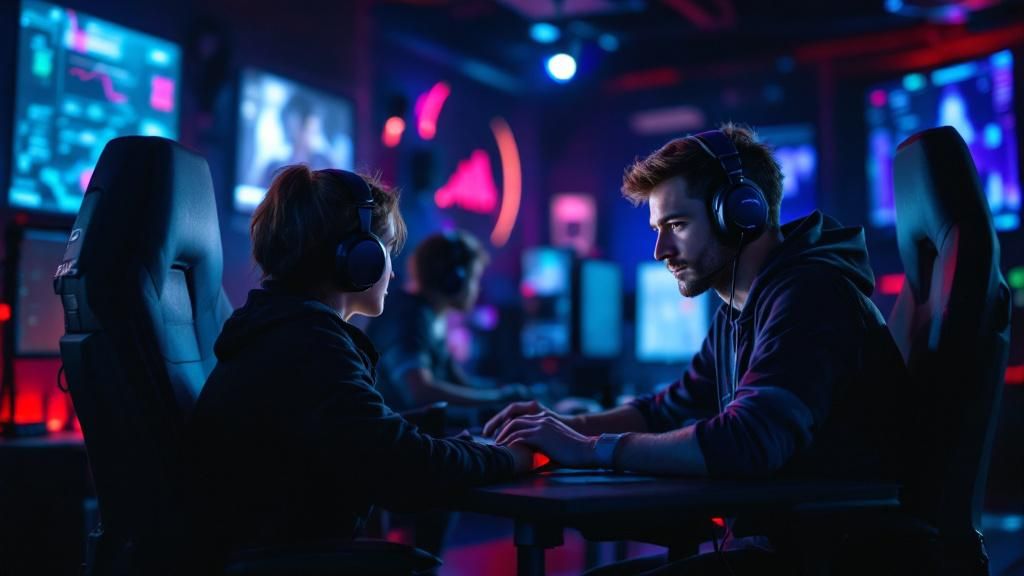
The esports coaching industry is witnessing substantial growth, transforming competitive gaming into a advanced, analytics-focused discipline. As professional teams commit significant resources in expert coaching teams, advanced performance analytics and tactical progression have become essential components of success. This article investigates how cutting-edge technology and analytical tools are transforming athlete development, team dynamics, and competitive performance, whilst examining the expanding career opportunities within this fast-growing field and the essential position coaches now play in shaping esports champions.
The Expansion of Professional Esports Coaching
The esports coaching industry has undergone a remarkable transformation over the past decade, transitioning from casual guidance towards a structured, professionalised discipline. As competitive gaming has developed into a multi-billion pound industry, organisations have acknowledged the critical importance of dedicated coaching staff. Professional teams now employ specialised coaches who concentrate on individual player development, tactical strategy, and group unity. This professionalisation has established esports coaching as a viable career path, drawing in experienced professionals from conventional sporting and gaming sectors alike.
The driving force for this swift growth lies in the growing intricacy of contemporary esports games and the increased standard of competition at professional levels. Teams participating in significant events face opponents who possess equivalent mechanical prowess and game knowledge, making the difference between victory and defeat often influenced by superior coaching and strategic preparation. Investment in coaching infrastructure has evolved into a critical need rather than a luxury, with organisations allocating considerable resources towards building comprehensive coaching departments. This change has profoundly reshaped how athletes prepare and progress, cementing coaching as an essential component of competitive achievement.
Performance Metrics and Data-Informed Approaches
Modern esports coaching has undergone significant transformation through the integration of sophisticated performance analytics and analytics-informed strategies. Coaches now draw upon comprehensive datasets encompassing player statistics, game metrics, and player behaviour to inform strategic decisions. This data-focused method permits teams to identify strengths, highlight areas for improvement, and develop targeted improvement programmes. The shift towards measurable performance tracking has enhanced the coaching profession from instinctive direction to analytics-driven coaching, substantially improving competitive outcomes and athlete progression pathways across professional esports organisations.
Real-Time Activity Tracking
Immediate performance monitoring systems provide coaches with instantaneous insights into player mechanics, tactical choices, and physical reactions throughout competitive matches. These advanced platforms track reaction times, precision rates, spatial awareness, and tactical awareness metrics. Coaches can analyse data streams in real-time during gameplay, enabling instant guidance and in-match adjustments. This live analytical capability allows teams to spot emerging patterns, exploit opposition vulnerabilities, and optimise player performance during critical moments, significantly improving in-game strategic execution and competitive advantage.
Integration of biometric sensors and eye-tracking technology has further enhanced immediate oversight systems within esports training facilities. These advanced tools measure focus intensity, stress responses, and gaze tracking data, offering thorough analysis into athletes’ mental and bodily conditions. Coaches apply this information to understand performance fluctuations, optimise training schedules, and develop mental resilience strategies. The integration of performance data and biometric information creates holistic performance profiles, enabling personalised coaching interventions that tackle gameplay and mental elements of competitive esports performance.
Strategic Analysis Tools for Gaming
Specialised game analysis software enables coaches to break down opponent tactical approaches, identify tactical patterns, and develop counter-strategies with remarkable accuracy. These systems capture extensive match footage, annotate critical instances, and generate comparative analytics across multiple games and opponents. Coaches employ replay tools with frame-by-frame analysis capabilities to assess player placement, ability usage, and tactical decision patterns. This granular analytical approach facilitates comprehensive strategic preparation, enabling teams to anticipate opponent patterns and develop tailored strategic systems that enhance competitive advantage and team performance outcomes.
Advanced artificial intelligence and algorithmic learning models now power modern competitive analysis platforms, automating pattern recognition and forecasting capabilities. These systems pinpoint effective tactical sequences, strategic resource deployment, and location-based tactical approaches by examining extensive professional match data. Coaches leverage AI-generated insights to assess team capabilities against elite competitors, recognise capability shortfalls, and direct training priorities. This strategic technology adoption democratises access to advanced tactical analysis, enabling smaller organisations to perform competitively against dominant organisations through data-informed coaching methodologies and data-driven tactical progression.
Future Prospects and Industry Expansion
The esports coaching industry is primed for significant expansion over the forthcoming years, driven by increasing investment from leading organisations and media networks. As competitive gaming continues to gain mainstream recognition, demand for skilled coaching professionals will accelerate significantly. Training providers are now developing specialised esports programmes, building structured pathways for prospective coaching professionals. Furthermore, advances in technology in artificial intelligence and machine learning offer even more refined analytical capabilities, helping coaches uncover deeper insights from performance data and enhance strategic approaches with exceptional detail.
International markets offer substantial opportunities for business development, particularly in regions where esports infrastructure stays underdeveloped. Developing nations are actively creating professional gaming scenes, generating demand for seasoned coaching skills and mentorship. Commercial and collaborative opportunities are broadening beyond traditional gaming companies, with mainstream brands recognising esports’ commercial potential. As professionalisation deepens across all competitive titles, coaching salaries and professional longevity will enhance substantially. This evolution will bring leading experts to the sector, ultimately elevating coaching standards and establishing esports as a legitimate, respected profession within the broader sports and entertainment landscape.
